


Dootalk:AI Chat
4.8611.00 Reviews
App Specs
- Version
- 1.0.4
- Updated On
- License
- Free
- Downloads
- 500,000+
- Developer
- M COYLE LLC
- Categories
- Entertainment
- Platform
- Android
Screenshots

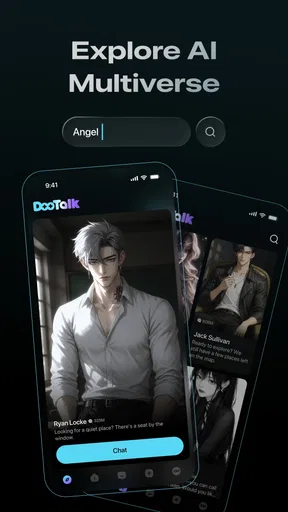
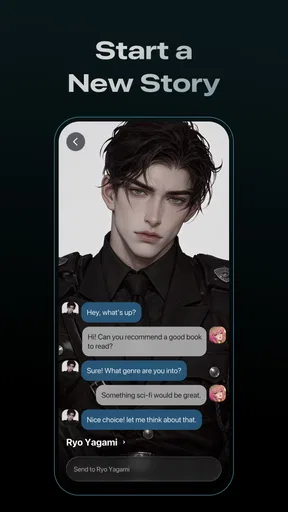
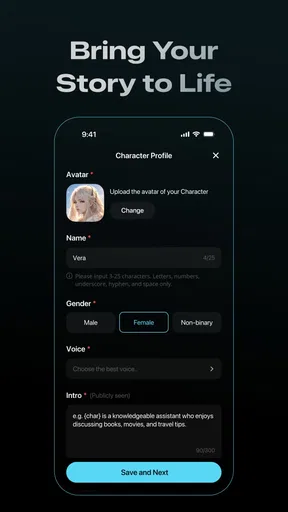

 Analysis by AppCompare
I tried Dootalk:AI Chat as an entertainment app built around warm, natural-feeling AI conversation, and my first impression was that it is aiming for something more relaxed than a conventional question-and-answer assistant. The appeal is not simply getting information. It is having a conversational space where the tone matters, where you can write casually, change subjects, or return to a thought without treating every message like a formal request.
That distinction is important. I would not approach this as a replacement for a search engine, a productivity assistant, or a messaging service with real people on the other side. I see it more as a private conversational companion for moments when I want interaction without arranging a call, waiting for a reply, or deciding how polished my first message needs to be.
The app comes from M COYLE LLC and is listed as free to install. It sits in the entertainment category, carries a Mature 17+ age rating, and has reached over 500 thousand installs. Its current release is version 1.0.4, with support starting from Android 7.0. Those details make it accessible to a broad range of Android users, although the mature rating is a clear reminder that it is intended for adults rather than children.
How Dootalk feels in everyday use
I find the everyday appeal of Dootalk less about getting a perfect answer and more about having an easy place to develop a thought at my own pace. In the next section, I’ll look at what its current version tells me about the app’s stage of development—and what I’d want to see it improve as it grows.
A conversational app rather than a task utility
The most useful way to understand Dootalk is to focus on the experience it is trying to create. A typical utility assistant is judged by how quickly it gives a correct answer or completes a request. Dootalk is better judged by whether the exchange feels comfortable enough to continue. That makes the wording of my messages more flexible: I can ask a direct question, describe a mood, brainstorm an idea, or simply start with an unfinished thought.
In practice, that makes the app suitable for small gaps in the day. I can imagine opening it during a quiet commute, after finishing work, or when I want to talk through an idea before deciding whether it is worth sharing with someone I know. The low-pressure aspect is the main attraction. There is no social obligation to answer immediately, and there is no concern that a half-formed thought will interrupt a friend.
That convenience also defines the app’s limits. A warm conversational style can make an exchange more pleasant, but it does not turn an artificial conversation into a human relationship. I would use the app for entertainment, reflection, and casual mental company. I would not treat it as a substitute for trusted personal support, professional advice, or an important conversation with someone who knows my circumstances.
Worth Reading Before You Choose

EA SPORTS FC Mobile 26 Is a Bigger Football Game, but It Takes Time

Flipboard Shows What News Apps Must Do Beyond the Feed

Switching to Android Auto Means Rethinking Your Driving Routine

Google Calendar Makes a Crowded Week Easier to Manage

Ludo King Makes the Most of the Minutes Between Plans

Baby Panda World Brings Quick Play to Modern Phones, but Its Game Library Feels Busy
Where the free entry point matters
The free starting point is a genuine advantage for anyone who wants to test the conversational style before spending anything. I would begin with short sessions rather than assuming that a paid option is necessary. The right question is not whether the app can produce a conversation at all, but whether its tone and usefulness are strong enough to earn a place in my routine.
There are in-app purchases ranging from $2.99 to $144.99 per item. That is a wide span, so I would pay close attention to what each purchase actually unlocks before confirming one. A low-cost option may be reasonable for someone who uses the app regularly and wants more from the experience, while the highest-priced option deserves much more scrutiny. The existence of a free version does not automatically make every paid choice good value.
I appreciate that this creates a simple decision path: try the free access, identify the part of the experience I genuinely use, and only then consider paying. I would avoid buying out of curiosity after a single enjoyable conversation. Entertainment apps can feel especially compelling in the moment, so a short cooling-off period is a sensible habit.
The app’s average rating is 4.8 from around 17 thousand ratings, alongside hundreds of written reviews. That is a strong sign that many users enjoy the experience, but ratings cannot tell me whether the paid options fit my own habits. A person who opens Dootalk occasionally may reach a different value judgment from someone who wants frequent, extended conversations.
Three practical ways I would use it
My first use case would be idea sorting. Instead of asking the app to produce a finished answer, I would describe a vague plan and use the conversation to expose the parts that need work. For example, I might write down several possibilities for a weekend activity, explain the mood I want, and ask the AI to help compare them. The useful result is not necessarily a perfect recommendation; it is the clearer set of choices I have after putting the thought into words.
My second use case would be low-stakes rehearsal. If I need to send a difficult but ordinary message, I can draft what I want to say and ask for a calmer or friendlier version. I would still make the final decision myself, especially when the subject is personal, but the conversation can help me notice when I sound too abrupt or unclear. This is a more realistic role for Dootalk than expecting it to solve the relationship behind the message.
My third use case would be a short evening check-in. I could mention what went well, what annoyed me, and what I want to remember for tomorrow. The benefit is the structure of responding to prompts and putting an experience into language. I would keep such conversations general and avoid treating the app as a secure diary unless I had personally reviewed the privacy information and felt comfortable with how the service handles messages.
Small habits that improve the experience
A useful technique is to tell the AI what kind of reply I want at the beginning of a conversation. If I want gentle encouragement, concise suggestions, playful brainstorming, or a challenge to my assumptions, saying so gives the exchange a clearer direction. This is more effective than repeatedly complaining that a reply feels too formal after the conversation has already drifted.
I would also separate entertainment chats from decisions with real consequences. For a movie idea, a fictional scenario, or a creative prompt, I can be open-ended and playful. For health, money, legal matters, or safety, I would move to a source designed for reliable guidance and verify anything important independently. The warm tone is precisely why this boundary matters: a pleasant response can feel persuasive even when it should only be treated as a starting point.
Another practical habit is to begin a new conversation when the subject changes substantially. Keeping a single thread for every topic may feel convenient, but it can make the exchange less focused. A fresh start lets me explain the new context clearly and makes it easier to judge whether the replies are actually addressing what I mean rather than carrying over assumptions from an earlier topic.
I would also test the app at different message lengths. Very short prompts can produce generic replies, while a long block of text may bury the point. A middle ground works better: explain the situation, state the desired kind of response, and identify any limits. That workflow is especially helpful when I am using the app to organize thoughts rather than simply pass time.
How it compares with familiar alternatives
Compared with a standard search engine, Dootalk is more natural for an unfolding conversation and less suitable when I need a list of sources, exact current information, or a quick factual lookup. Search is the better choice when verification matters. Dootalk is the better fit when the value comes from expressing a thought and developing it through back-and-forth dialogue.
Compared with a general-purpose AI assistant, its entertainment positioning makes the emotional tone more central to the decision. A general assistant may be preferable for drafting documents, coding, calculations, or structured work. I would choose Dootalk when the conversation itself is the point, not merely the route to a finished task.
Compared with human messaging, the app offers immediate availability and removes the pressure of bothering someone. What it cannot provide is genuine personal knowledge, shared history, or reciprocal care. That trade-off is not a minor detail. If I am looking for comfort because I need a trusted person, I would message that person instead. If I want a private, always-available place to explore a thought without social scheduling, Dootalk makes more sense.
Compared with entertainment such as video or games, the app is more interactive but also asks more from me. I need to contribute words and steer the exchange. That can be rewarding when I want participation, but it may feel like work when I only want to switch off. Someone looking for passive relaxation may be happier with a show, music, or a simple game.
The trade-offs behind the friendly tone
The central trade-off is between comfort and critical distance. A conversation that feels warm is easier to continue, but I need to remember that style is not proof of understanding. I would watch for replies that sound confident while missing the emotional or practical point. When that happens, I would restate the situation plainly instead of assuming the app has understood me.
There is also a cost-control trade-off. Free access lowers the barrier to trying the app, while the available purchases mean that frequent use can become a paid decision. Because individual items extend up to $144.99, I would never treat an in-app purchase as an automatic upgrade. I would first decide how often I use the app, what specific benefit I am buying, and whether that benefit is meaningful beyond the novelty of a new conversation.
The mature age rating is another important boundary. I would not install it for a child or assume that an adult-oriented conversational app is appropriate for a shared family device. Adults should still use ordinary judgment about the subjects they discuss and the personal details they type. A conversational interface can invite disclosure more easily than a form or search box, so I would keep identifying information to a minimum.
Version 1.0.4 suggests that the product is still relatively early in its development compared with long-established entertainment platforms. That is not automatically negative; newer apps can feel focused and uncluttered. It does mean I would keep expectations realistic and judge the current experience on its own merits rather than assuming it already has the depth, refinement, or breadth of a mature service.
Who is most likely to get value?
I think Dootalk is a good match for adults who enjoy conversational entertainment and want an AI that feels approachable rather than purely functional. It may appeal to someone who likes brainstorming aloud, wants a low-pressure way to rehearse messages, or enjoys exploring fictional and everyday topics through dialogue. The free entry point makes it easy to find out whether the tone works for that person.
It is also potentially useful for people who dislike starting with a rigid prompt. The app’s concept suits natural language: I can begin with a question, a complaint, an idea, or a half-finished sentence. That flexibility lowers the effort of getting started, particularly when I do not yet know exactly what I want from the conversation.
I would skip it if my main goal is dependable research, professional productivity, or communication with real people. I would also skip it if I am uncomfortable with the idea of paying for an entertainment conversation after trying the free version. The broad purchase range makes it especially important for budget-conscious users to set their own limit before exploring optional extras.
People seeking help with serious emotional distress should choose human or professional support instead. Dootalk can provide a conversational outlet, but an AI cannot take responsibility for a person’s wellbeing or understand a crisis in the way a qualified service or trusted individual can. That is a firm use-case boundary, not a criticism of the app’s entertainment purpose.
My value judgment
I see the strongest value in the free trial experience and in repeat use that has a clear personal purpose. If I open Dootalk several times a week to sort ideas, practice wording, or enjoy a light conversation, it can justify its place on my phone without pretending to be something it is not. The app earns its value through the quality and comfort of the interaction, not through a long list of unrelated tools.
Paid value is more personal. Someone who finds the free experience too limited may decide that a modest purchase is worthwhile, but I would evaluate each item separately and avoid assuming that the most expensive choice offers the best experience. Since the purchase range is substantial, the sensible approach is to start free, use the app in several different situations, and spend only when the benefit is clear and recurring.
The app’s strong user rating and large install base make it worth investigating, but they should be treated as a reason to try rather than a guarantee that it will suit every personality. Some people will enjoy the warm conversational focus immediately. Others will find that a normal assistant, a search tool, or a human chat gives them more useful results.
My verdict is to try it if you want adult-oriented AI conversation for entertainment and low-pressure reflection, especially because the app is free to begin with. I would keep personal boundaries in place, verify important information elsewhere, and delay any purchase until the free experience has proved useful more than once. For me, that makes Dootalk a worthwhile experiment and a potentially enjoyable companion app, but not an essential tool and not a replacement for real relationships or specialist help.
In short, I would recommend it to a friend who wants conversation rather than productivity. I would say: install it, test how naturally you can steer the exchange, and notice whether it adds something to your day. If the interaction feels genuinely useful or entertaining, consider the available paid choices carefully. If it feels repetitive, too artificial, or unnecessary, the free starting point also makes it easy to walk away without turning a casual experiment into an expensive habit.
Pros
- Quick AI replies make casual conversations feel smooth and engaging.
- Supports creative prompts for brainstorming
- writing
- and everyday questions.
- Simple interface is easy to understand for first-time users.
- Useful for practicing conversations without pressure or judgment.
- Can provide ideas when you feel stuck or need a fresh perspective.
Cons
- AI responses may occasionally be inaccurate or lack useful context.
- Some features may require a subscription or in-app purchases.
- Privacy details should be checked before sharing personal information.
- Long conversations can become repetitive or lose track of earlier messages.
- The app’s usefulness depends heavily on the quality of your prompts.
FAQs for Dootalk:AI Chat
What is Dootalk: AI Chat, and what can I use it for?
Dootalk: AI Chat is an artificial-intelligence chat application designed for asking questions, generating ideas, writing or rewriting text, summarizing information, and having general conversations. In testing, it is most useful for quick assistance with everyday tasks, brainstorming, study support, and content drafting. It should be treated as a helpful tool rather than an unquestionable source of facts, especially for medical, legal, financial, or other important decisions.
Does Dootalk: AI Chat require an account or an internet connection?
The exact sign-in requirements can depend on the version of Dootalk: AI Chat and the platform where it is installed. Because AI responses are generally processed through online services, an active internet connection is normally necessary for chatting and for accessing the latest features. Before downloading, check the app-store listing for current login requirements, supported devices, regional availability, and whether guest access is offered.
Is Dootalk: AI Chat free to download and use?
Dootalk: AI Chat may be available as a free download, but free access does not always mean that every feature is unlimited. Many AI chat apps use usage limits, advertisements, premium plans, or in-app purchases for extended conversations and advanced tools. Review the pricing page and subscription terms carefully before starting a trial, and confirm how recurring billing works so you are not surprised by future charges.
Can I trust the answers provided by Dootalk: AI Chat?
Dootalk: AI Chat can produce fluent and useful answers, but its responses may occasionally contain outdated, incomplete, or incorrect information. During normal use, it is best approached as an assistant for drafting, explaining, and brainstorming rather than as an authoritative reference. Verify important claims with reliable sources, avoid sharing confidential information, and never rely on an AI response alone for health, safety, legal, or financial decisions.
Is my personal information safe when using Dootalk: AI Chat?
Before using Dootalk: AI Chat for private conversations, read its privacy policy and review the permissions requested by the app. Avoid entering passwords, payment details, identity documents, confidential work material, or sensitive personal and health information unless you clearly understand how that data is collected, stored, used, and deleted. Also check whether chats may be retained or used to improve the service.


